TheHelpful.com Hub
🛠️
Introduction to Digital Infrared Photography:
Seeing the Invisible World
Photography is usually about capturing what the human eye sees, but the visible spectrum (400nm–700nm) is just a tiny fraction of the 'light' that is around us. My project, InfraredPhotography.co.uk, is dedicated to exploring the surreal and dramatic world that exists beyond the colour red – specifically the near-infrared spectrum (700nm–1100nm).
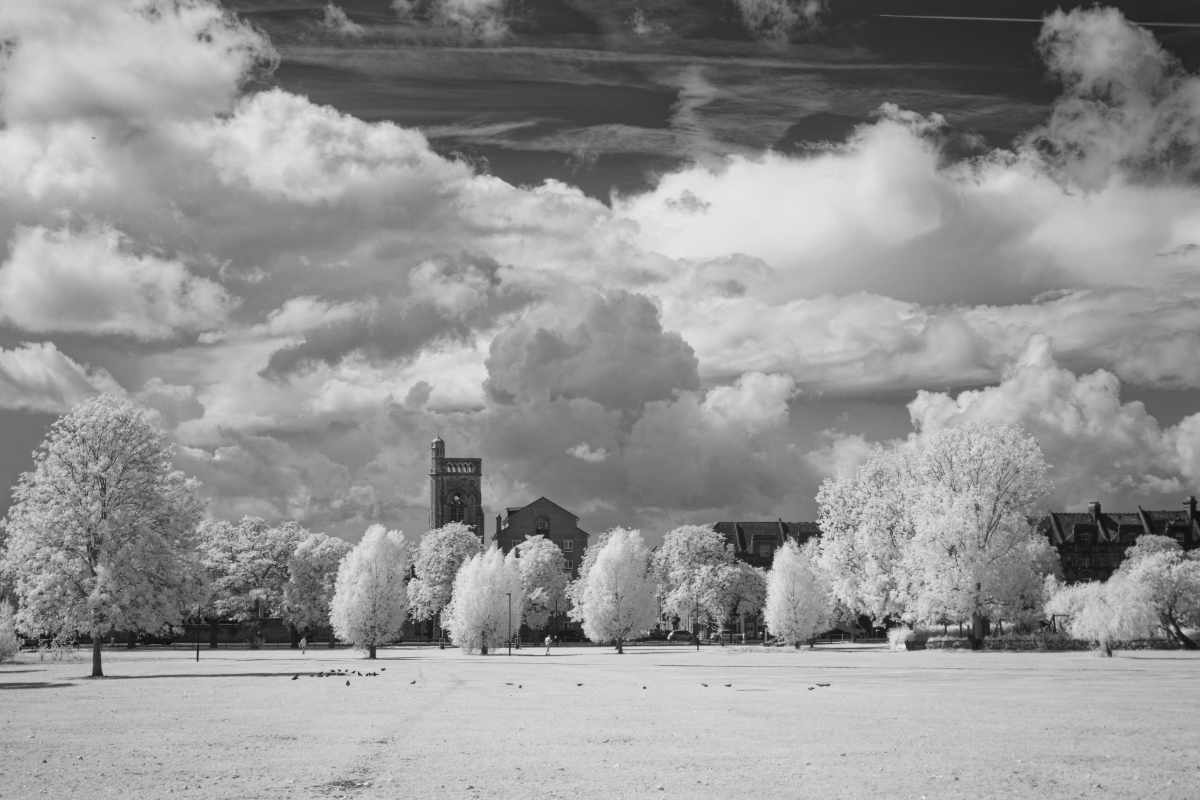
While standard landscapes can sometimes look flat or predictable, infrared photography transforms common scenes into dreamscapes. Foliage can turn pink, gold or ghostly white (known as the "Wood Effect"), blue skies can render as deep, dramatic blacks, and atmospheric haze cuts away to reveal crystal-clear horizons.
The Technical Barrier: Modding the Camera
One of the main reasons I created a dedicated site for this niche topic is the technical barrier to entry. You cannot simply put a filter on a standard DSLR and expect great results.
Digital camera sensors are naturally sensitive to infrared light, but manufacturers install a "Hot Mirror" filter in front of the sensor to block it. To shoot proper IR, you often need to perform a "full-spectrum conversion." This involves surgically removing the internal blocking filter and replacing it with clear glass. This modification allows the camera to see the full range of light, which we can then manipulate and selectively block using internal sensor filters or external lens filters (like the 720nm or 590nm pass filters).
The "False Color" Process
Taking the photo is only half the battle. Raw infrared images usually come out looking bright pink or deep red. The magic happens in post-processing.
On the main site, I focus heavily on the "Channel Swap" technique. By swapping the Red and Blue channels in Photoshop or comparable software, we can shift those pink skies back to a rich, familiar blue, while keeping the trees a surreal white or golden yellow. It creates a "false color" image that feels simultaneously familiar and alien.

Explore the Dedicated Resource
I maintain InfraredPhotography.co.uk as a specialized hub for this art form. It serves as both a gallery of my work and a knowledge base for others trying to learn the technique.
If you are interested in seeing high-resolution examples of the "Wood Effect," learning about 720nm vs. 590nm filters, finding the magic filter combination for achieving the classic Aerochrome look, or finding tutorials on how to process these complex files, the InfraredPhotography.co.uk site contains my full archive.